


Lloyd’s Register’s FOBAS fuel-quality report for the first half of 2026 indicates that variations in marine fuel quality continue to affect vessel operations worldwide.
According to the information shared, the use of biofuel blends has increased, including blends containing FAME, without creating significant quality concerns. At the same time, some fuels that met ISO 8217 requirements still caused stability problems or other incidents after delivery and use on board.
FOBAS notes that recurring quality issues remain widespread across major bunkering hubs. These include sulphur non-compliance, elevated water content, excessive sediments and catalytic fines. For operators, such deviations can translate into additional cost, technical risk and disruption.
Fuel testing before and after delivery remains one of the most effective ways to identify non-compliant products and diagnose degradation in fuels that initially appeared to meet specification.
As the energy transition accelerates and available blends become more diverse, fuel-quality monitoring is becoming increasingly important for shipowners, operators and suppliers, especially in high-volume bunkering ports.
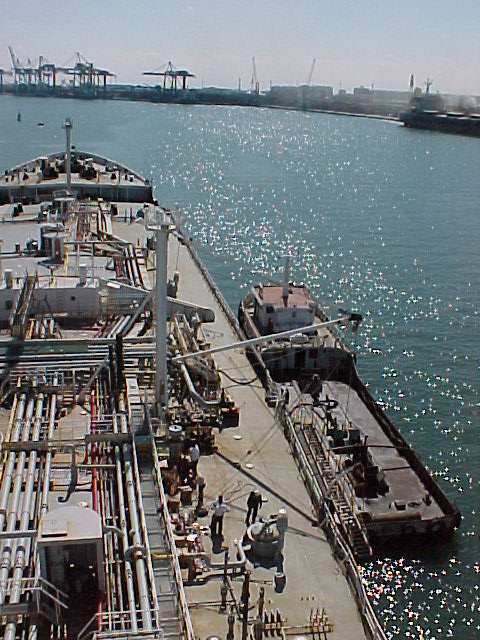
Image: “Bunkering-or-taking-fuel.jpg”, Haus, via Wikimedia Commons, public domain.