

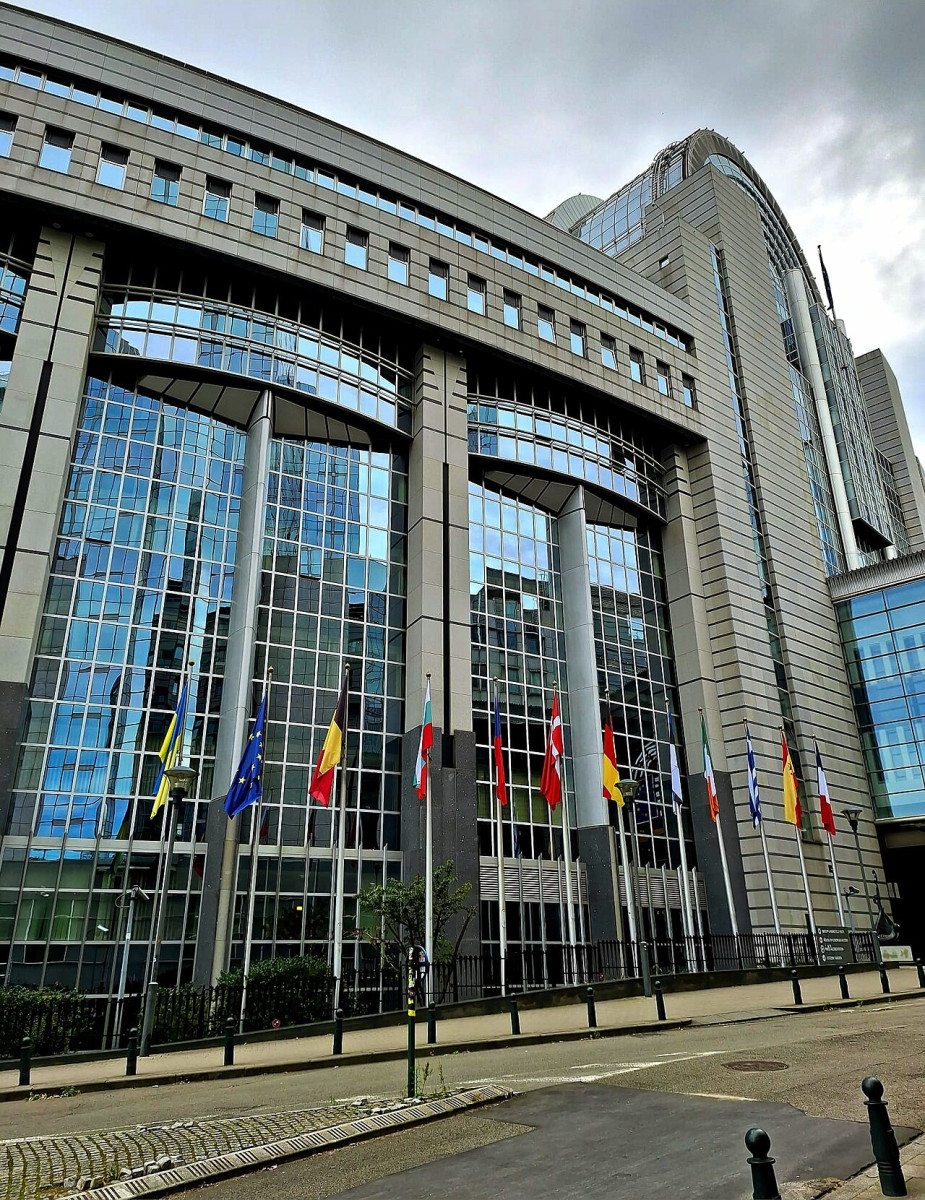
The European Parliament building (Espace Léopold) in Brussels – Paasikivi, CC BY-SA 4.0, via Wikimedia Commons.
On 4 November 2026, at the European Parliament in Brussels, MEP Jeannette Baljeu hosted a policy lunch on “Strengthening EU Shipyard Competitiveness through Enhanced Sustainability”, organised in collaboration with the consortium of the European CirclesOfLife project, funded under Horizon Europe. The event brought together EU policymakers and representatives from across the maritime manufacturing value chain to discuss how circularity and sustainability can strengthen the competitiveness and resilience of Europe’s maritime industrial base.
A central message was that sustainability should not be regarded solely as an environmental objective, but as an increasingly important component of European industrial competitiveness. European shipyards and maritime manufacturers operate in a highly competitive international market, where differences in energy and recycling costs can have a significant impact.
From circular ambitions to practical tools
Benoît Loicq, Director R&D Technical and European Regulatory Affairs at SEA Europe, and Jorinus Kalis, Manager Process Innovation at Damen Shipyards and coordinator of CirclesOfLife, presented how the project anchors circularity more firmly within European maritime manufacturing. CirclesOfLife contributes in three areas: providing practical tools that support decarbonisation, resource efficiency and competitiveness; improving material circularity throughout the ship lifecycle, including a blueprint for Digital Product Passports for ships; and connecting practical industry experience with emerging European policy initiatives, including the Circular Economy Act (CEA) and the European Industrial Maritime Strategy (EIMS).
One of the practical solutions developed within the project is the Shipyard Environmental Performance Index (SEPI), which supports shipyards in identifying environmental hotspots in their processes and provides insight into technologies and measures that can help address them.
From the Green Deal towards competitiveness and resilience
Gabriel Mialocq, Head of Sector for Aviation and Waterborne research and innovation at CINEA, reflected on the project’s origins in the European Green Deal and its initial focus on greener shipyards, noting that the discussion now increasingly connects these environmental objectives to competitiveness and resilience. The collaborative character of CirclesOfLife brings together complementary expertise from industry, research, NGOs and associations across Europe, with the project’s value extending across the entire maritime value chain.
The discussion spanned the whole ship lifecycle: from measuring sustainability and investing in energy efficiency at shipyards, to the importance of reliable environmental information for shipowners, and on to ship recycling, where maintaining and expanding European capacity depends on sufficient and predictable demand.
From successful projects to industrial scale
Jaap Gebraad of the Waterborne Technology Platform underlined the innovative nature of the maritime sector and the need to connect private industry investment with continued public support for research and innovation, while Antidia Citores, General Manager of Green Marine Europe, shared that her organisation will support the further exploitation of CirclesOfLife results through its certification and help connect them to the wider maritime value chain.
Closing the discussion, MEP Jeannette Baljeu returned to the importance of innovation, standardisation and clear policymaking: for Europe to remain competitive while raising its environmental ambitions, industrial innovation needs an enabling framework that accounts for the realities of international competition.
The CirclesOfLife consortium brings together: DAMEN Research Development & Innovation BV, BALance Technology Consulting GmbH, Center of Maritime Technologies GmbH, Green Marine Europe, Netherlands Maritime Technology Foundation, FSG S+O Shipyard GmbH, Bureau Veritas M&O, VTT, Delft University of Technology, NGO Shipbreaking Platform, University of Genoa, GALLOO, SEA Europe, ERIKS, Nordic Circles, Meyer Werft and Meyer Turku. Further information: www.circles-of-life.eu.